
Prime Minister Narendra Modi launched the 'We Will Do It' slogan, aiming for India to become a developed nation by 2047 through visionary policies and hard work, while also addressing the challenge of societal division.

Indian benchmark indices, Sensex and Nifty, closed nearly flat on Thursday, influenced by the US Federal Reserve's interest rate hike and indications of further monetary tightening. Despite some intraday gains, caution prevailed, with foreign institutional investors continuing to offload equities. Meanwhile, the National Stock Exchange of India's (NSE) mega initial public offering opened for subscription, garnering 39 per cent subscription on its first day.

'The most effective investment approach is one that aligns with an investor's temperament, risk tolerance, and decision-making style.'

Zoho cofounder Sridhar Vembu dismisses exaggerated fears about AI's catastrophic potential and global development pauses. He advocates for India to adopt an independent AI strategy, fostering partnerships while avoiding entanglement in US-China tech rivalry. Vembu stresses extensive investment in foundational R&D across sectors, distinguishing it from costly frontier AI model development. He also highlights concerns about AI's impact on human judgment, skill erosion, and job disruption, particularly in software engineering, while remaining optimistic about new economic opportunities.

'I don't think the government will sacrifice such a fine institution for monetary gains.'

Bankers said the impact could become more visible from September 29 as customers could withdraw larger amounts of cash, although ATM operations are increasingly managed through third-party cash-loading arrangements.

Sri Lankan legend Sanath Jayasuriya has lauded Indian teen cricketer Vaibhav Sooryavanshi, calling him a 'different kind of talent' and the 'future for India', despite his recent exclusion from the playing XI against Afghanistan.

The larger question raised by the associations is simple: If ISRO is no longer to manufacture launch vehicles, what will happen to the institution's accumulated capabilities and the people who built them?
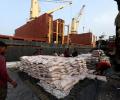
India's exports saw a significant increase of 26.12 per cent to USD 43.81 billion in August, leading to a narrowed trade deficit of USD 26.86 billion, driven by strong demand from key global markets and diverse sectors.

Indian benchmark indices, Sensex and Nifty, saw early gains driven by strong buying in IT stocks like HCL Tech, Tech Mahindra, TCS, and Infosys, alongside a significant boost from HDFC Bank.

A two-day weekend would help employees recover physically and mentally. They would return better prepared for branch work that demands patience, judgment, and accuracy, asserts Tamal Bandyopadhyay.
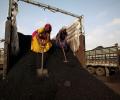
India's eight core infrastructure sectors experienced a significant slowdown in production growth, reaching a seven-month low of 0.5 per cent in May, primarily driven by negative growth in coal, crude oil, and refinery products.
Zoho co-founder Sridhar Vembu argues that predictions of AI's catastrophic outcomes are overstated and a global pause in AI development is improbable. He urges India to adopt an independent AI strategy, focusing on extensive foundational R&D across sectors, while remaining wary of market monopolisation attempts by major tech players. Vembu also highlights concerns about AI's impact on human judgment, skill development, and job markets, particularly for junior professionals.

Education sector experts agree that using the "best technology" was essential to ensure students did not have to sit for an examination all over again because of a question paper leak.

India's passenger vehicle (PV) exports saw a 17 per cent year-on-year decline in August, contrasting sharply with a 36.5 per cent surge in domestic dispatches, which reached a record high for the month as automakers prepared for the festive season.

Non-banking financial companies (NBFCs) experienced a significant 68.5 per cent year-on-year growth in gold-backed credit in July 2026, while banks saw their gold loan growth moderate to 88.1 per cent from 136.4 per cent a year prior, according to RBI data.

'An instruction came from somebody in Delhi saying, "don't go with the launch".'

'There will be some inconvenience to people. But we have given one-month notice to the government one month ago.'

Researchers at the Indian Institute of Technology Madras (IIT,M) have developed a novel "morphing skin" concept for aircraft wings, inspired by bird flight. This adaptive external skin dynamically reshapes in real time to prevent aerodynamic stalls, enhance lift, reduce drag, and significantly improve aircraft safety and fuel efficiency. The technology holds promise for commercial aviation, unmanned aerial vehicles, and defence applications.
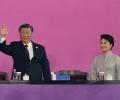
Sports Minister Mansukh Mandaviya addressed the Indian contingent for the upcoming Asian Games, urging them to perform under pressure and continue the nation's impressive medal growth. He highlighted India's significant increase in medal tally from 2014 to 2023, attributing it to an improved sports ecosystem, and expressed confidence in the 503-member squad's potential.

State-run defence major Hindustan Aeronautics Limited (HAL) has delivered LCA Tejas Final Operational Clearance twin-seater trainers and HTT-40 basic trainer aircraft to the Indian Air Force, along with Dhruv next-generation helicopters to Pawan Hans. This significant handover, witnessed by Defence Minister Rajnath Singh, marks a crucial step in India's journey towards self-reliance in the aerospace sector, showcasing HAL's diverse capabilities in military, civil, and training aviation.

The BRICS New Delhi Declaration has endorsed India's proposals for a Working Group on Sports Technology and a Sports Goods Manufacturing Conclave, aiming to enhance cooperation and innovation among member nations in the sports sector.

Indian listed companies experienced their fastest revenue growth in 15 quarters during Q1FY27, with combined net sales rising 18.4% year-on-year, while net profit grew 16%, primarily driven by mining, metals, and banking sectors, despite a contraction in operating margins due to higher input costs.

A rocket designed and developed by ISRO is being transferred to industry for production.
Nine ISRO associations want to know whether this is simply an effort to expand India's industrial capacity or part of a larger policy under which ISRO itself will eventually withdraw from rocket manufacturing.

India's venture capital deal value grew by a modest 5 per cent in the first seven months of the year, significantly lagging the global average surge of 161 per cent, reflecting continued investor caution and valuation discipline.

The benchmark Sensex plummeted 813 points to a three-month low, with the Nifty settling below 23,450, as escalating tensions in West Asia drove crude oil prices above USD 100 per barrel, leading to widespread selling in IT, FMCG, financial services, and oil & gas shares.

Indian stock market investors are closely monitoring crude oil prices, geopolitical developments in West Asia, and the implications of the US Sanctioning Russia and Iran Act, which could impose tariffs on countries, including India, that purchase Russian crude.

State-run Hindustan Aeronautics Limited (HAL) has delivered LCA Tejas FOC twin-seater trainers and HTT-40 basic trainer aircraft to the Indian Air Force, and Dhruv Next Generation helicopters to Pawan Hans. This significant handover, attended by Defence Minister Rajnath Singh and Civil Aviation Minister K Rammohan Naidu, underscores India's progress towards self-reliance in aerospace, strengthening both military and civil aviation capabilities with indigenous platforms.

Indian benchmark equity indices, Sensex and Nifty, rebounded after a two-day losing streak, driven by strong buying in blue-chip IT stocks and positive global market cues, with the Sensex climbing 330.92 points.
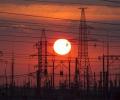
India's power sector is undergoing a significant transformation, driven by a planned shift towards renewable energy and ambitious capacity expansion targets, with major players like NTPC, JSW Energy, Adani, and Tata Power prioritising predictable returns. However, execution challenges and valuation concerns remain critical factors for sustained growth.

Indian benchmark indices Sensex and Nifty recorded sharp gains, rising over 1 per cent, driven by strong performances in IT stocks, HDFC Bank, and renewed foreign fund inflows, despite mixed global cues and elevated crude oil prices.

Surging growth in sales by companies hasn't translated into higher salaries just yet.

Dig into the prospectus. Use the prospectus to understand the business and its risks.
Indian benchmark indices, Sensex and Nifty, closed lower, primarily due to a downturn in banking and financial stocks, coupled with crude oil prices remaining above USD 80 per barrel. Geopolitical uncertainties and new regulatory proposals for the non-bank lending sector also contributed to cautious investor sentiment.

The demerger of Vedanta's four new entities - Vedanta Aluminium Metal, Vedanta Oil & Gas, Vedanta Power, and Vedanta Iron & Steel - has led to a 16% appreciation in aggregated market capitalisation, with Vedanta Aluminium Metal identified as a likely near-term top performer due to its scale, low production costs, and favourable commodities cycle.

'There is mis-alignment in strategic thinking of the board and management.' 'As the business environment and customer behaviour evolve rapidly, boards are increasingly looking for leaders who can bring new ideas and challenge legacy approaches.'

Telecom industry body COAI and the British High Commission signed an MoU to boost cooperation in AI, connectivity, and digital trust, fostering responsible tech innovation. The pact, signed at the CO.AI 2026 event, focused on AI's role in intelligent networks, security, and public services. Discussions highlighted AI's importance in combating fraud, improving network efficiency, and ensuring secure digital services. TRAI Chairman Anil Kumar Lahoti and Acting British High Commissioner Ben Mellor emphasised the need for balanced governance and international collaboration to ensure secure, inclusive, and responsible digital transformation.

Their message is blunt: Public scientific wealth should not be transferred at what they describe as 'throwaway prices'.capability, recruitment, promotional avenues and the voice of its employees.

The Nifty IT index has been one of the worst sectoral performers in calendar year 2026, losing nearly 29 per cent till date compared to the 8 per cent dip in the Nifty 50 index.

Chinese President Xi Jinping's first visit to India in seven years for the BRICS Summit and bilateral talks with Prime Minister Narendra Modi is set to address crucial aspects of India-China relations, including trade, investment, and persistent border tensions.
